Overcome the Fear of Visibility: Self-Doubt to Expression
If you're like me, there are moments when you feel pulled to share more of who you are, and at the same time, an urge to pull back.
You probably have ideas about what you'd like to accomplish in your life, ideas you really care about. Maybe it’s a story you want to share, or work you’ve created that you're proud and passionate about. But the thought of people seeing this vulnerable side of you can bring a rush of self-doubt.
I know that tug-of-war well. For years, every time it came down to putting myself out there, I froze.
Wanting to be seen and fearing it at the same time doesn’t mean something is wrong with you. And getting past the fear of visibility isn’t about forcing yourself into the spotlight. It’s about feeling safe enough to step forward at your own pace.
Wanting to be seen and fearing it at the same time is something a lot of women live with. The fear of visibility can look like hiding your ideas, toning yourself down, or waiting until you feel “perfect” before you step forward.
Getting past that self-doubt doesn’t mean forcing yourself into the spotlight. It starts on the inside, with learning to trust yourself. When you step forward because you trust yourself, and not because you’re pushing yourself, being seen stops feeling like a performance. It starts to feel honest.
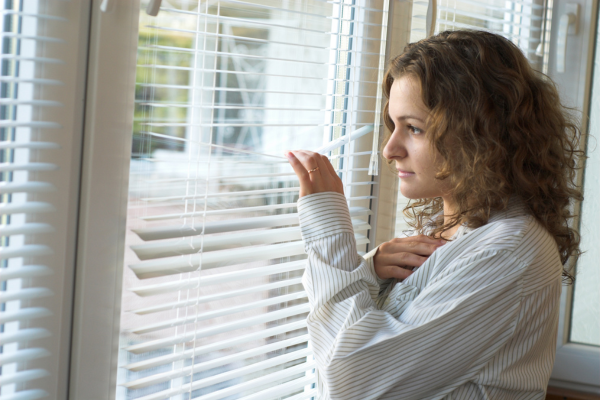
Where the Fear of Visibility Comes From
The fear of visibility rarely starts with social media or public speaking. It usually starts much earlier.
Maybe you were laughed at or dismissed as a child. Maybe you grew up in a family where it felt safer to stay small. Over time, you learned a simple rule: being seen isn’t safe.
Picture a girl who shares her idea in class and gets laughed at. Years later, she’s the woman who stays quiet in meetings, even when she has something worth saying.
As an adult, it can look like putting off sharing a project, editing yourself mid-sentence, or playing down what you’ve achieved. You tell yourself “I’m just shy” or “I’m not ready yet.”
That was true for me. Staying invisible kept me protected for years.
Your hesitation isn’t a flaw in your character. It’s an old way of protecting yourself that worked once and has stayed longer than you need it.
“Shame is the intensely painful feeling or experience of believing that we are flawed and therefore unworthy of love and belonging.”
— Brené Brown, PhD, LMSW
Three Ways to Feel Safer Being Seen
You can’t push your way past self-doubt. Pushing harder only makes the fear push back. A kinder question works better: “What part of me still believes it isn’t safe to be seen, and what does it need?”
Here are three places to start.
1. Notice the story you tell yourself. When you picture being visible, listen for what comes up. It might be “Who do you think you are?” or “You’ll embarrass yourself.” You learned those lines a long time ago, and they aren’t facts. Ask yourself, “Is that true for me now?”
2. Notice what your body does. Fear often shows up as a tight chest, a clenched jaw, or a racing heart. Don’t fight it. Put a hand on your heart, take three slow breaths, and tell yourself, “It makes sense that I feel this way.”
3. Take one small step, then rest. Make a deal with yourself. You’ll share one post or speak up once, and then you’ll stop for the day. Each time you keep that deal, you show yourself that being seen doesn’t mean abandoning yourself. You don’t have to go from hiding to the spotlight overnight.
Exposure vs. Expression
There are two very different ways to be seen, and it helps to know which one you’re doing.
Exposure is being seen before you feel ready, because you think you should. You post or speak up out of pressure, comparison, or a need to prove yourself. Afterward you replay every word and promise yourself you’ll never do it again.
Expression is sharing something true, at a pace you can handle. It has less to do with likes or applause and more to do with one question: “Am I being honest with myself as I do this?”
Here’s the difference. In one version, you force yourself to go live on social media while you’re shaky and unprepared, then spend hours worrying about how you came across. In the other, you record a short message for a small group you trust, and you say what you mean.
Both are being seen. Only the second one teaches you that being seen can feel good.
Before you share anything, ask yourself: “Am I trying to prove something, or do I have something to say?”
“Vulnerability is not about winning or losing; it’s having the courage to show up when you can’t control the outcome.”
— Brené Brown

Private reflection often lays the groundwork for authentic, sustainable visibility.
You Don’t Need a Stage to Be Seen
Being visible doesn’t require a platform or a big audience. It can be showing a rough draft of your book's manuscript to someone you trust before it’s finished. It can be telling a friend, “I’m nervous about this decision, but I want to try.”
Some days you’ll feel brave, and some days you’ll want to hide again. Both are normal. Each small step teaches you a new rule to replace the old one: being seen, at my own pace and on my own terms, can be safe.
So choose one small thing today: a message, a sentence, or a share. Let it be imperfect, and let it be enough.
I know how hard that first small step is, because I’ve had to take it myself, more than once.
What your heart wants most is on the other side of your fear. You don’t have to get there alone.